
Benefits of Multi-Axis CNC Machining
What is CNC Machining?
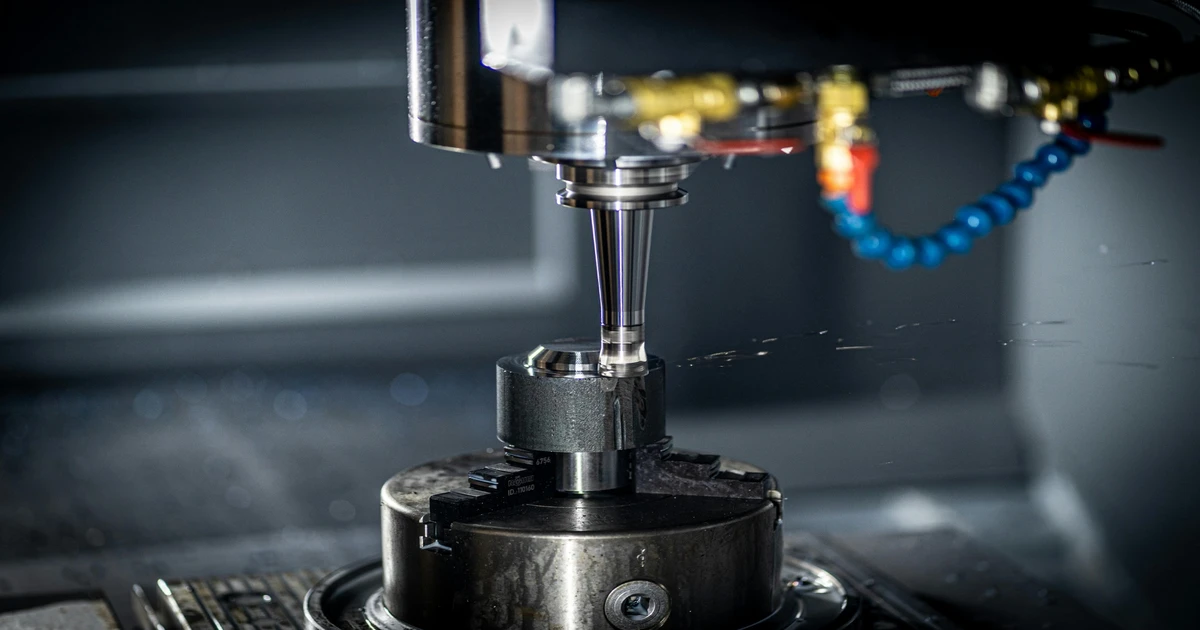
CNC machining is a manufacturing process in which computer-controlled machines are used to cut, shape, drill, and finish metal or plastic components with high precision. The term CNC stands for Computer Numerical Control. In this process, software programs and digital instructions control the movement of cutting tools and machinery during manufacturing operations. CNC machining is widely used in industries such as aerospace, automotive, medical equipment, electronics, industrial machinery, and engineering manufacturing because it supports accurate, repeatable, and efficient production operations. The process is highly suitable for producing precision-engineered components, complex mechanical systems, prototypes, and large-scale industrial products.
What is Multi-Axis CNC Machining?
Multi-axis CNC machining is an advanced manufacturing process in which CNC machines operate across multiple axes simultaneously to machine complex components with high precision. Traditional CNC machines generally operate on three axes, while multi-axis CNC machines can operate on four, five, or even more axes depending on the machining requirements. The additional axes allow the cutting tool and workpiece to move in multiple directions, enabling manufacturers to create highly complex geometries and detailed engineering features in a single setup. Multi-axis CNC machining is widely used in industries requiring advanced precision engineering and complex component manufacturing.
Importance of Multi-Axis CNC Machining in Manufacturing
Multi-axis CNC machining plays a major role in modern manufacturing because industries increasingly require highly complex, lightweight, and precision-engineered components. Manufacturers use multi-axis CNC machining to improve dimensional accuracy, reduce setup time, increase production efficiency, and achieve better surface finishes. The process also helps reduce manual repositioning and secondary machining operations, improving overall manufacturing consistency and operational efficiency. Industries such as aerospace, automotive, medical equipment, defense, and industrial engineering heavily depend on multi-axis machining technologies for advanced production capabilities.
Benefits of Multi-Axis CNC Machining
Multi-axis CNC machining offers several important advantages compared to traditional machining systems. The process supports advanced component manufacturing, improved machining flexibility, faster production operations, and superior dimensional accuracy. By allowing simultaneous movement across multiple axes, manufacturers can machine highly detailed and complex components efficiently. The technology also supports automation, reduced production errors, and improved product quality in precision engineering applications.
Industries That Use Multi-Axis CNC Machining
Aerospace industries use multi-axis CNC machining for turbine blades, engine components, aircraft structural systems, and lightweight aerospace assemblies. Automotive manufacturers depend on multi-axis machining for engine systems, transmission parts, precision tooling, and advanced vehicle components. Medical industries use the process for surgical instruments, implants, orthopedic devices, and precision medical equipment manufacturing. Defense industries rely on multi-axis CNC machining for complex weapon systems, aerospace defense components, and military engineering applications. Industrial machinery manufacturers also use multi-axis machining for molds, tooling systems, and precision engineering equipment. The process supports industries requiring advanced precision, structural reliability, and complex component manufacturing.
1. Ability to Machine Complex Geometries
One of the biggest advantages of multi-axis CNC machining is its ability to manufacture highly complex component geometries. The simultaneous movement across multiple axes allows cutting tools to access difficult angles, curved surfaces, and intricate internal features. This capability is especially important for aerospace, medical, and automotive industries where advanced engineering designs are required. Complex components can be manufactured more efficiently and accurately compared to traditional machining methods.
2. Improved Dimensional Accuracy
Multi-axis CNC machining provides extremely high dimensional accuracy and tight tolerances. The ability to machine components from multiple directions in a single setup reduces positioning errors and improves machining precision. Improved dimensional accuracy helps manufacturers maintain strict engineering standards and reliable assembly compatibility. This advantage is highly valuable in industries requiring precision-engineered components and critical safety systems.
3. Reduced Setup Time
Traditional machining often requires multiple setups and manual repositioning of the workpiece during manufacturing operations. Multi-axis CNC machining significantly reduces setup time because the machine can access multiple surfaces and angles without repositioning the component manually. Reduced setup time improves production efficiency and helps manufacturers complete machining operations faster. Fewer setups also reduce the risk of alignment errors and improve overall manufacturing consistency.
4. Better Surface Finish Quality
Multi-axis CNC machining produces smoother surface finishes and improved component quality. The cutting tool can maintain optimal positioning and continuous machining movement throughout the manufacturing process. Improved cutting conditions reduce tool vibration and machining marks, resulting in cleaner and more precise surfaces. Better surface finishes reduce post-processing requirements and improve overall product performance.
5. Higher Production Efficiency
Multi-axis CNC machining supports faster and more efficient manufacturing operations. Complex machining tasks can often be completed in a single setup, reducing production time and increasing productivity. The process also supports automated manufacturing operations with minimal manual intervention. Higher production efficiency helps manufacturers reduce operational costs and improve large-scale production capabilities.
6. Reduced Material Wastage
Precision machining and optimized cutting operations help reduce material wastage during manufacturing. Multi-axis CNC systems improve cutting accuracy and allow efficient material removal while maintaining structural integrity. Reduced material wastage lowers production costs and supports sustainable manufacturing practices. This advantage is especially important when machining expensive aerospace and medical-grade materials.
7. Improved Tool Life and Machining Performance
Multi-axis CNC machining improves tool performance by maintaining better cutting angles and optimized machining conditions. Balanced cutting operations reduce excessive tool wear, vibration, and heat generation during machining. Improved tool life helps manufacturers reduce tooling costs and maintain stable machining quality. Better machining performance also supports higher operational reliability and production consistency.
8. Future of Multi-Axis CNC Machining
As manufacturing technologies continue evolving, multi-axis CNC machining systems are becoming more advanced through automation, artificial intelligence, smart manufacturing, and digital engineering integration. Manufacturers are increasingly investing in robotic automation, real-time monitoring technologies, IoT-enabled machinery, and intelligent machining systems. The future of multi-axis CNC machining will focus on improving production speed, precision, automation, sustainability, and advanced engineering capabilities. Modern industries will continue relying heavily on multi-axis machining for complex and high-performance manufacturing applications.
Final Conclusion
Multi-axis CNC machining is one of the most advanced manufacturing technologies used in modern precision engineering and industrial production. The process offers several important benefits, including the ability to machine complex geometries, improved dimensional accuracy, reduced setup time, better surface finishes, higher production efficiency, reduced material wastage, and improved machining performance. Industries such as aerospace, automotive, medical equipment, defense, industrial machinery, and advanced engineering manufacturing continue relying heavily on multi-axis CNC machining for precision component production. With continuous advancements in automation, smart manufacturing, and digital engineering technologies, multi-axis CNC machining will continue shaping the future of industrial manufacturing and advanced precision engineering applications.