
The Role of Pressure Die Casting in Modern Manufacturing
What is Pressure Die Casting?
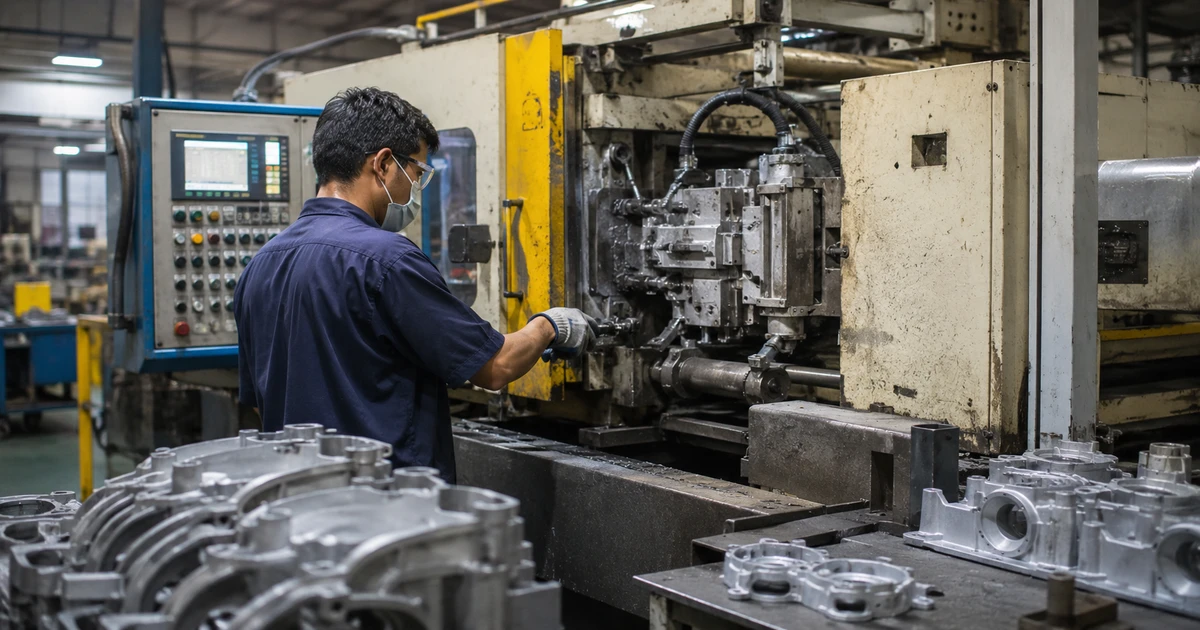
Pressure die casting is a manufacturing process in which molten metal is injected into a steel mold, also known as a die, under high pressure. Once the metal cools and solidifies, the finished component is removed from the mold. This process is widely used for producing metal parts with complex shapes, smooth finishes, and precise dimensions. It is especially suitable for high-volume production because it allows manufacturers to create identical components repeatedly with excellent accuracy.
Importance of Pressure Die Casting
One of the biggest advantages of pressure die casting is its ability to produce highly accurate components with tight tolerances. Modern industries rely on precision-engineered parts to ensure smooth machine performance and product reliability. Pressure die casting helps manufacturers maintain consistency across every production cycle, making it ideal for industries where precision is critical.In large-scale manufacturing, speed matters. Pressure die casting allows manufacturers to produce large quantities of components in a shorter period compared to many traditional manufacturing methods. The process supports faster production cycles, reduced manufacturing time, increased productivity, and efficient mass production, making it a preferred solution for industries with high production demands.
Components produced through pressure die casting usually have smooth surfaces and clean finishes. This reduces the need for additional machining or finishing processes. A better surface finish not only improves the appearance of components but also helps reduce overall production costs and processing time.Pressure die casting also creates components with excellent structural strength and durability. The process produces dense and reliable parts capable of handling demanding industrial applications. This is one reason why industries such as automotive, aerospace, and industrial machinery depend heavily on die-cast components.
Industries That Use Pressure Die Casting
One of the biggest advantages of pressure die casting is its ability to produce highly accurate components with tight tolerances. Modern industries rely on precision-engineered parts to ensure smooth machine performance and product reliability. Pressure die casting helps manufacturers maintain consistency across every production cycle, making it ideal for industries where precision is critical. In large-scale manufacturing, speed matters. Pressure die casting allows manufacturers to produce large quantities of components in a shorter period compared to many traditional manufacturing methods. The process supports faster production cycles, reduced manufacturing time, increased productivity, and efficient mass production, making it a preferred solution for industries with high production demands.
Components produced through pressure die casting usually have smooth surfaces and clean finishes. This reduces the need for additional machining or finishing processes. A better surface finish not only improves the appearance of components but also helps reduce overall production costs and processing time. Pressure die casting also creates components with excellent structural strength and durability. The process produces dense and reliable parts capable of handling demanding industrial applications. This is one reason why industries such as automotive, aerospace, and industrial machinery depend heavily on die-cast components.
1. The Role of Advanced Infrastructure in Die Casting
Successful pressure die casting operations depend heavily on advanced manufacturing infrastructure. Modern facilities equipped with high-performance machinery and quality inspection systems help ensure production efficiency and consistency. Advanced die casting machines, CNC machining centers, tooling systems, quality testing equipment, and automated production systems all play a major role in maintaining quality standards while handling high production volumes efficiently.
2. Importance of Quality Control in Pressure Die Casting
Quality control is one of the most important aspects of modern manufacturing because even small defects can affect product performance and reliability. Manufacturers use strict inspection processes to ensure every component meets required specifications. These processes may include dimensional inspections, surface quality testing, material verification, performance testing, and process monitoring. Such measures help ensure that the final products meet industry standards and customer expectations.
3. Benefits of Pressure Die Casting for Businesses
Businesses choose pressure die casting because it offers several long-term advantages. High-volume production reduces the cost per component, while the process ensures consistency by producing identical components repeatedly with minimal variation. Efficient material usage helps minimize production waste, and the process easily supports both medium and large-scale manufacturing requirements. In addition, improved precision and consistency contribute to better product performance and overall reliability.
4. The Future of Pressure Die Casting
As industries continue moving toward automation and advanced engineering, pressure die casting will remain an important manufacturing solution. The growing demand for lightweight, durable, and high-precision components is driving innovation in die casting technologies. Manufacturers are increasingly focusing on sustainable production methods, energy-efficient systems, smart manufacturing technologies, improved automation, and high-performance materials.
The future of manufacturing will depend on processes that combine speed, quality, precision, and efficiency — and pressure die casting continues to meet these expectations.
Final Conclusion
Pressure die casting has become a vital part of modern manufacturing due to its ability to produce highly accurate, durable, and complex metal components with excellent consistency. The process enables faster production cycles, reduced material wastage, and cost-effective manufacturing, making it ideal for large-scale industrial applications.Industries such as automotive, electronics, aerospace, industrial machinery, and consumer goods rely heavily on pressure die casting to manufacture lightweight yet strong components that meet strict quality and performance standards. Its capability to deliver smooth surface finishes and dimensional precision also reduces the need for additional machining and post-processing.
Modern advancements in automation, tooling, and engineering have further improved the efficiency and reliability of pressure die casting. Manufacturers can now achieve higher productivity, better quality control, and faster turnaround times while maintaining scalability for growing market demands.As industries continue to focus on innovation, sustainability, and high-performance manufacturing, pressure die casting remains a key solution for producing reliable and cost-efficient components that support the future of modern engineering and industrial development.